2025
Furniture Design for RIM Showroom
FIELD
Materials + Surfaces
Architecture + Interiors
Material Innovation
DISCIPLINE
Furniture Design
Spatial Curation
Narrative Environments
OVERVIEW
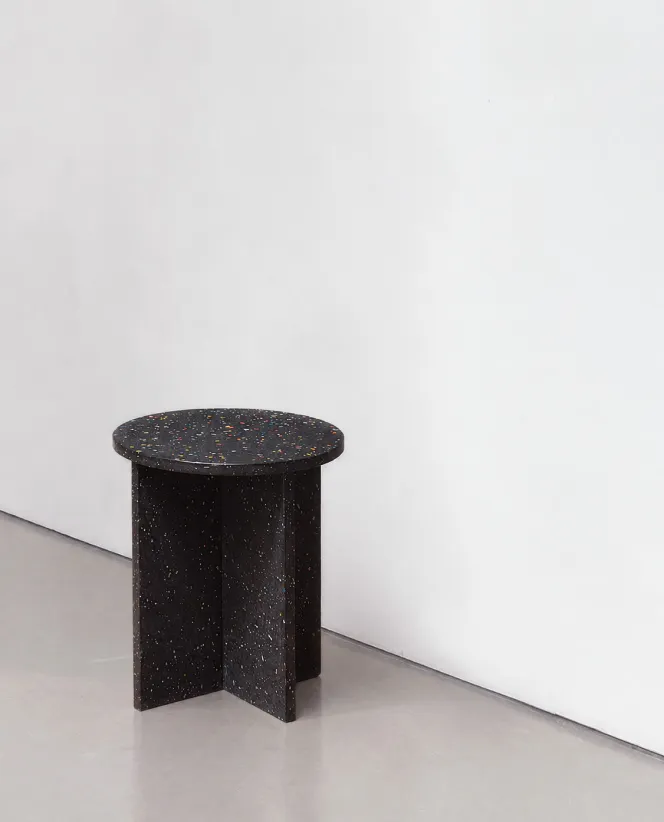
Furniture Design for RIM is a series of furniture and display objects developed for the showroom of ROAM IN MATERIALS. Using RIM's recycled materials as a starting point, the project explores cutting, intersecting, layering and structural composition to bring material from flat surface into three-dimensional form—opening up possibilities across furniture, sculpture and spatial installation, while inviting new ways of imagining how sustainable materials can be used across different scales of design.
What else can a material become?
What else can a material become?
FIELD
Materials + Surfaces
Architecture + Interiors
Material Innovation
DISCIPLINE
Furniture Design
Spatial Curation
Narrative Environments
[1]
Material as a Starting Point
RIM's materials are often first encountered as samples or flat sheets. The project begins by asking what happens when these materials move beyond the scale of a sample and become objects that can be seen, touched and used.
Their original thickness, texture and colour are deliberately retained, allowing the material itself to participate in the formation of each piece. Furniture becomes a medium through which material enters into dialogue with space, allowing its inherent qualities to be perceived anew through scale, touch and use.
[2]
Structure as Language
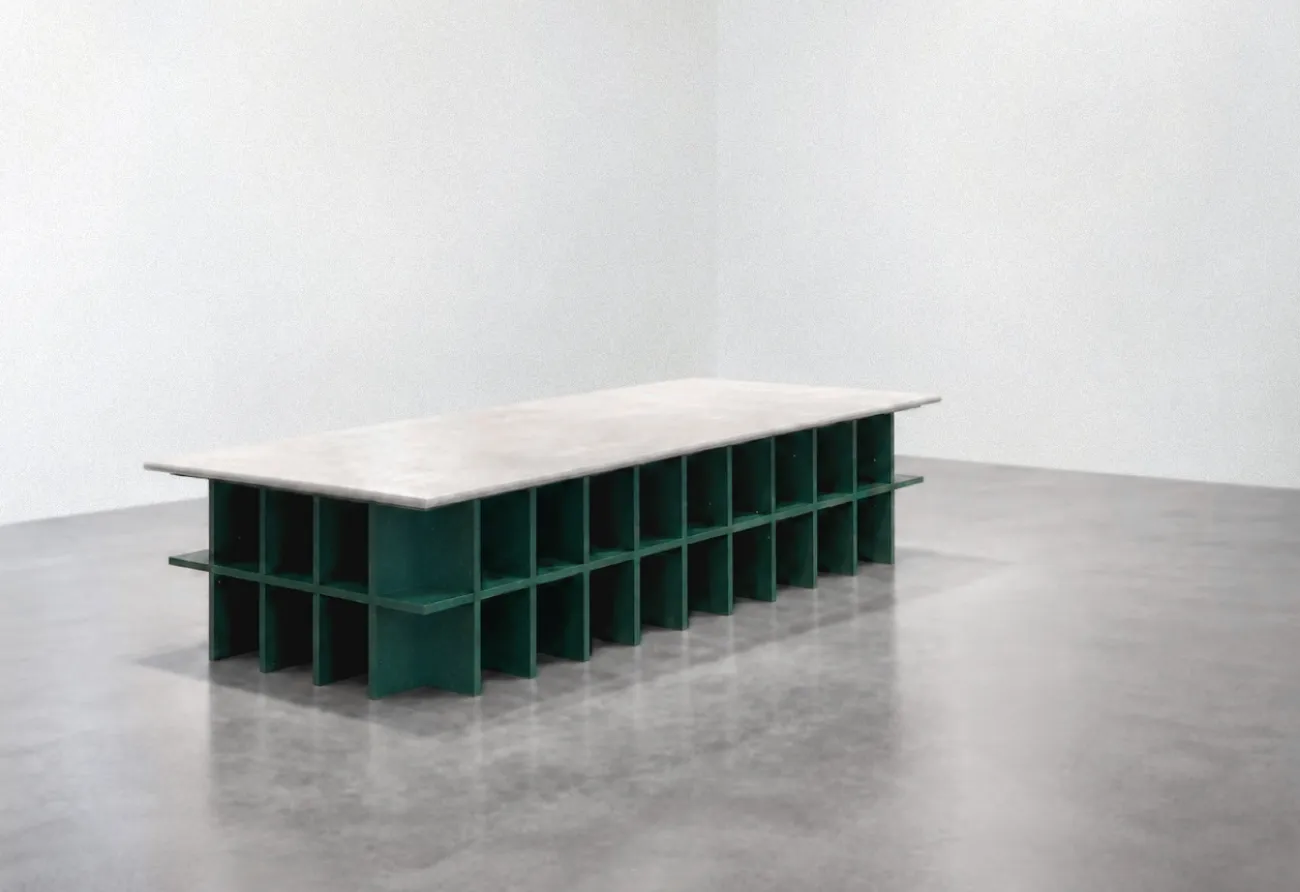
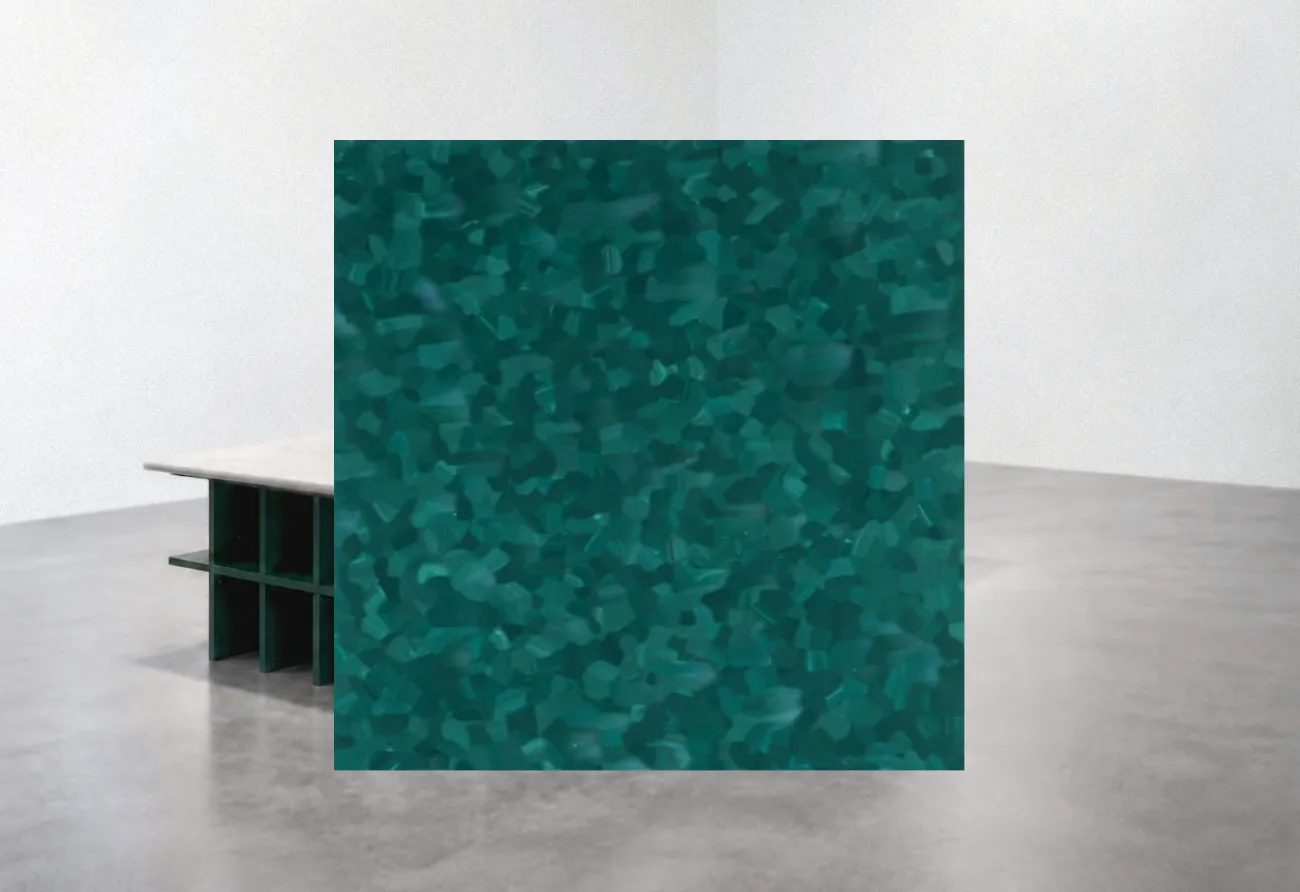
The shelving, bench and stools are developed through direct compositions of vertical and horizontal planes. Repetition, intersection and support establish a clear structural rhythm, while joints and construction remain visible as part of the visual language.
Within these restrained geometries, attention shifts towards the material itself—its colour, thickness, edges and surface qualities become increasingly present.
[3]
Material as Possibility
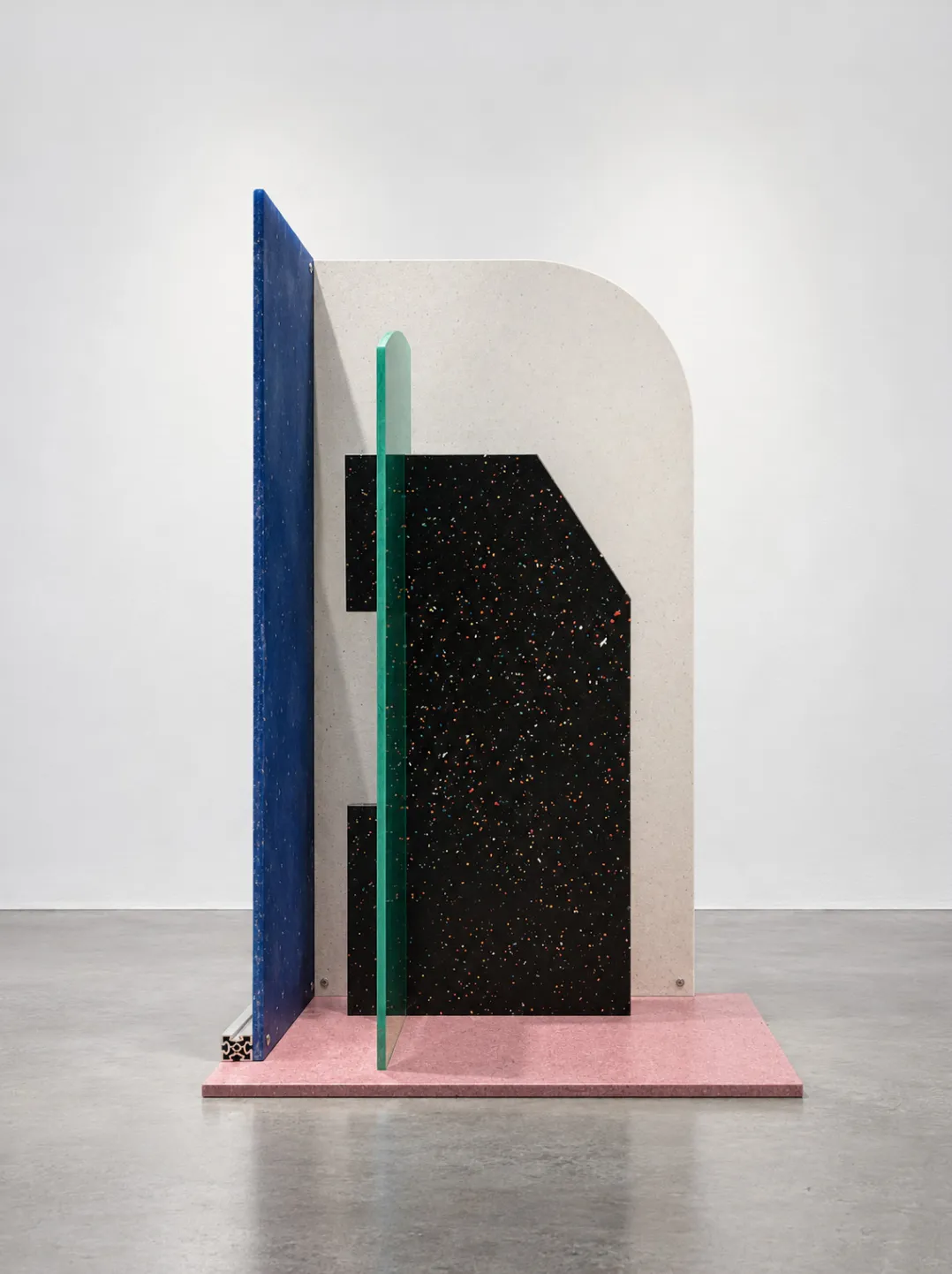
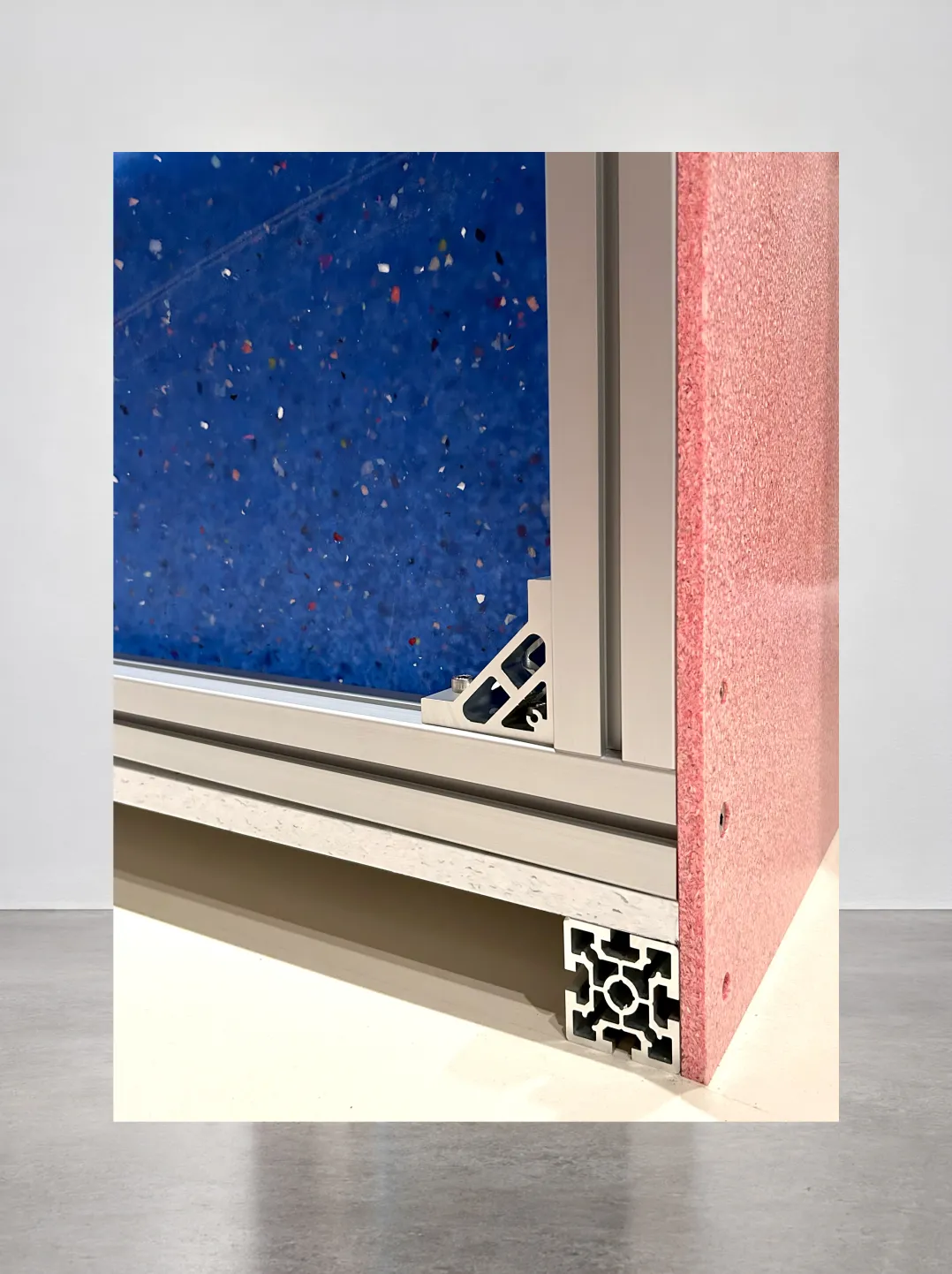
The layered screen brings together materials of different colours, transparencies, textures and thicknesses, creating new relationships of depth, overlap, light and concealment. Across the series, material gradually expands beyond its role as a surface or finish. It becomes structure, furniture, spatial interface and sculptural form.
The showroom therefore becomes a place where material can be understood through physical experience—and where new possibilities for its use can begin to be imagined.
[4]
Between Furniture and Object
As familiar furniture archetypes are reworked, another territory begins to emerge between function and sculpture.
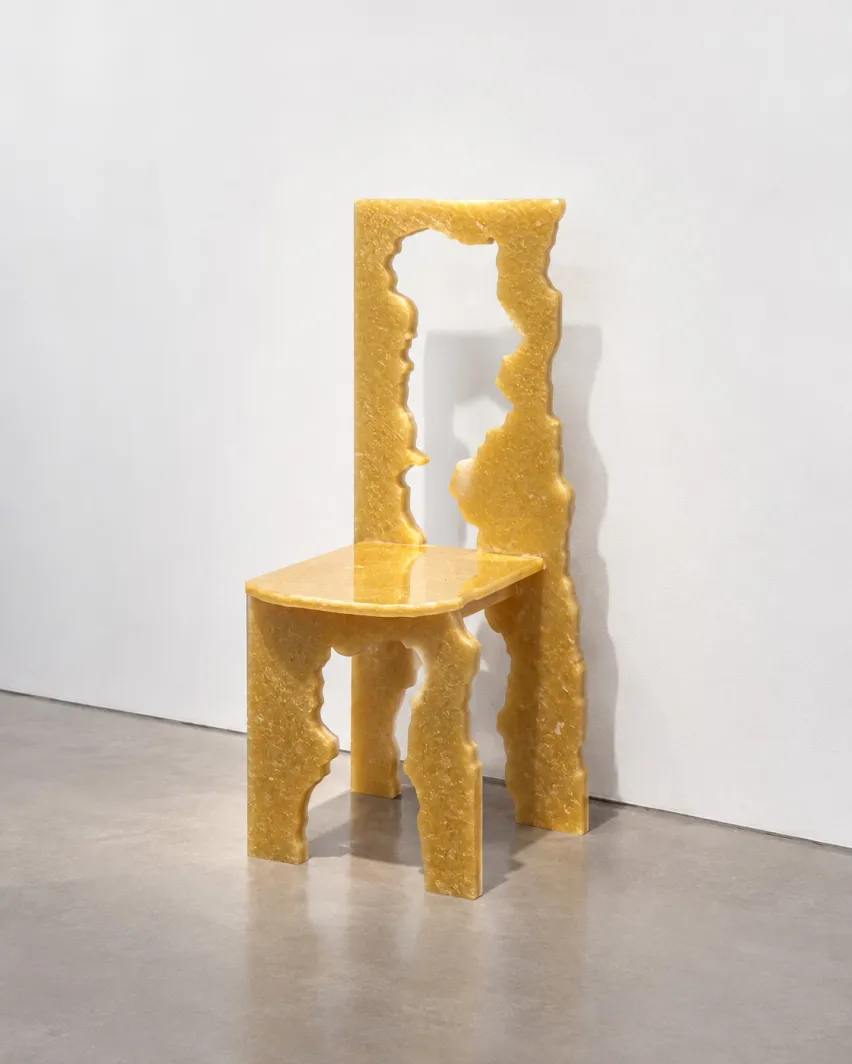
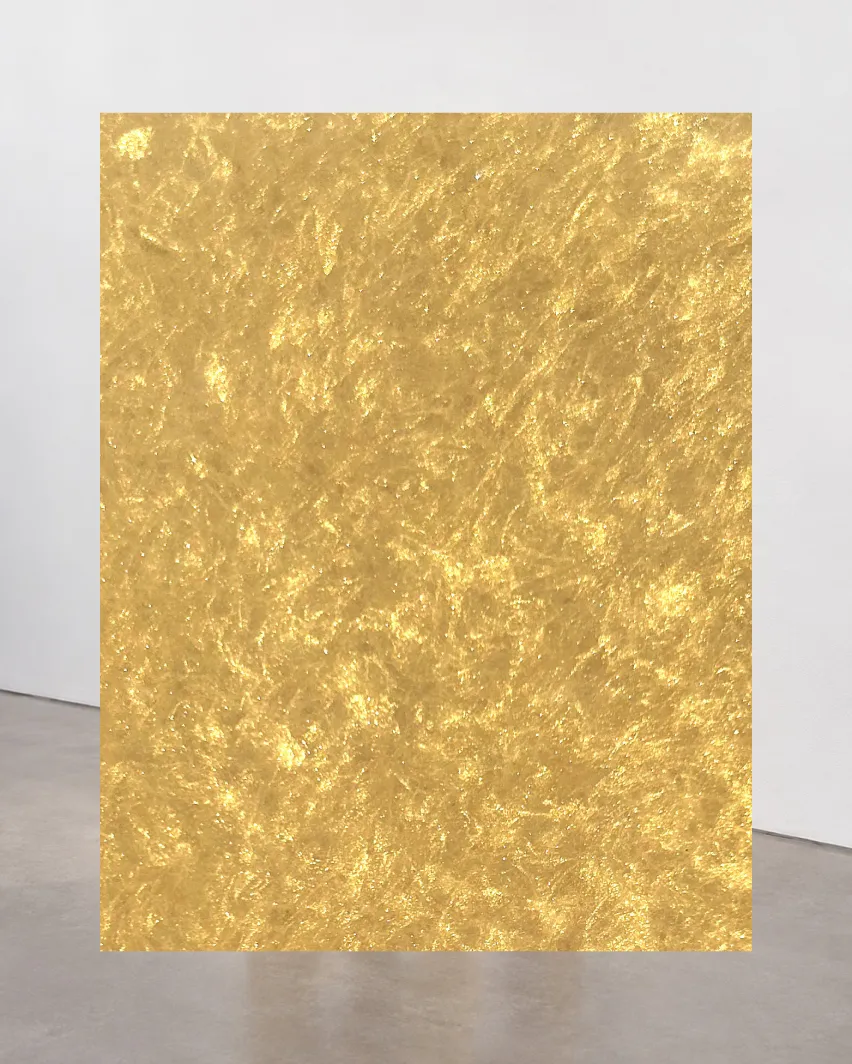
The yellow chair retains the recognisable scale and structure of a chair, while its irregular, eroded edges disrupt the precision of the original sheet material. Function remains legible, yet the piece gains a stronger object-like presence.
Furniture becomes something to inhabit, observe and encounter.
[5]